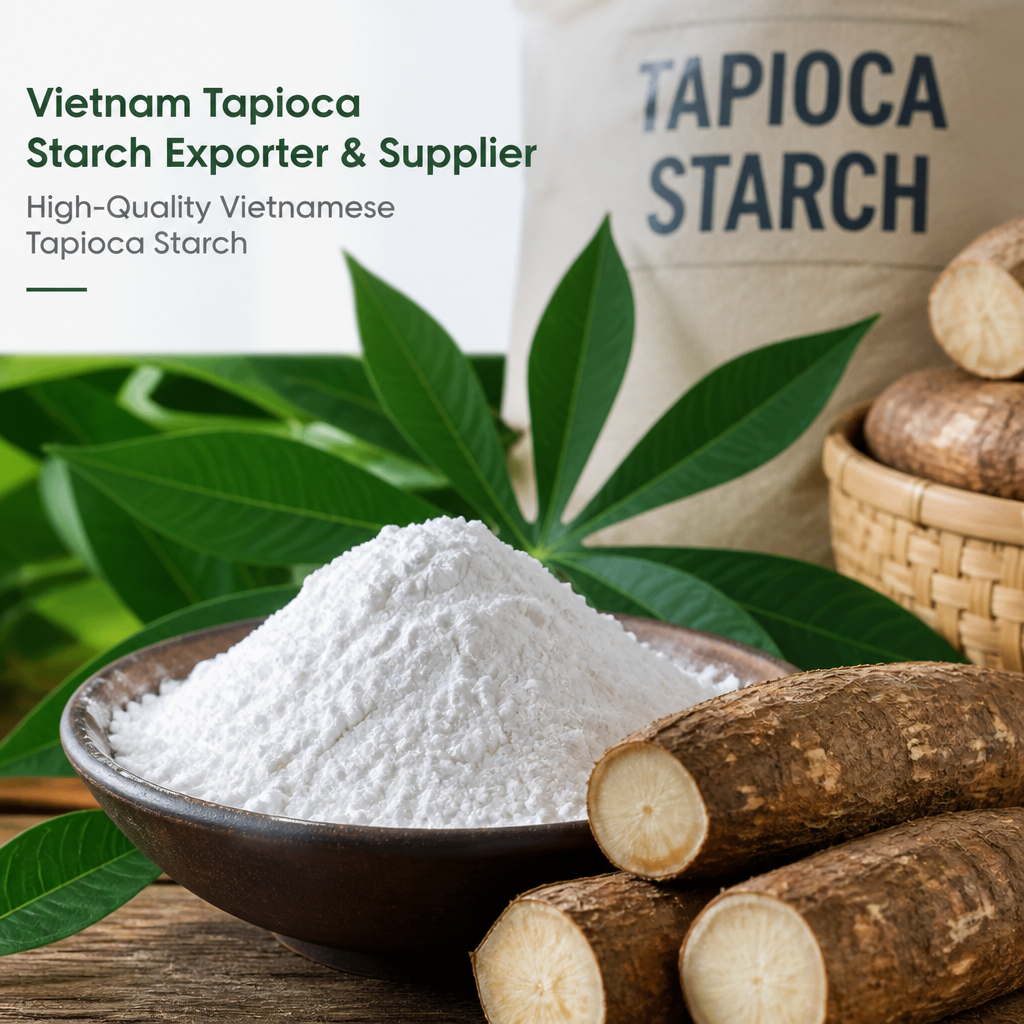
Vietnam Tapioca Starch Exporter offers high-quality starch derived from cassava, meeting global demands with competitive pricing and reliable supply chains.
In 2021, Vietnam's cassava growing area reached 528,000 hectares, producing nearly 10.7 million tons of cassava, which is processed into high-quality tapioca starch for export. This remarkable production capacity underscores Vietnam's position as a leading exporter of tapioca starch on the global stage. The country's strategic focus on cultivating cassava roots, a critical raw material for tapioca starch, has propelled it to the forefront of the industry.
Vietnamese tapioca starch is renowned for its high quality and competitive pricing, making it a preferred choice for buyers worldwide. The starch is derived from the roots of the cassava plant, a crop that thrives in Vietnam's favorable climate and fertile soil. This natural advantage allows Vietnamese producers to maintain a consistent supply of high-grade tapioca starch, which is essential for meeting the diverse needs of international markets.
Vietnam's dedication to quality and cost-effectiveness ensures that its tapioca starch remains competitive in the global market. These strengths help Vietnam maintain its reputation as a reliable and efficient exporter, serving various industries that require both excellence and affordability.
Understanding Tapioca Starch
Tapioca starch, a staple in Vietnam's export portfolio, is renowned for its unique properties and high starch content, making it a preferred choice in various industries. This versatile product is derived from cassava roots, which are abundant in Vietnam, allowing the country to maintain its status as a leading Vietnam Tapioca Starch Exporter.
Tapioca starch is characterized by its purity, with a starch content typically ranging between 80% to 90%. This high starch concentration is essential for applications that demand consistency and quality, such as in the food industry where it is used as a thickening agent. The starch's neutral taste and hypoallergenic nature further enhance its desirability, particularly in gluten-free food products.
Beyond the culinary world, tapioca starch's versatility extends to numerous industries. It is a critical component in the textile industry, where it is used as a sizing agent to strengthen yarns. In the paper industry, it serves as a binder, improving the paper's strength and printability. Additionally, its adhesive properties are harnessed in the production of glues and pastes, showcasing its multifaceted applications.
When it comes to packaging and minimum order quantities (MOQ), Vietnamese suppliers offer flexible solutions to accommodate various business needs. Packaging options typically include 25kg, 50kg, and 850kg bags, allowing buyers to select according to their specific requirements. The MOQ considerations are designed to be adaptable, ensuring that businesses of all sizes can access high-quality tapioca starch without the burden of excessive inventory.
"Vietnam's tapioca starch is not only a testament to the country's agricultural prowess but also a versatile product that meets global industrial demands."
In summary, the properties and applications of tapioca starch underscore its significance in both domestic and international markets. Its adaptability across industries, coupled with strategic packaging and MOQ options, solidifies Vietnam's position as a key player in the global starch market.
Historical Background of Tapioca Starch
Tapioca starch has a rich and evolving history in Vietnam, marked by significant developments that have positioned the country as a key player in the global market. The journey of tapioca starch in Vietnam began with the cultivation of cassava, a root crop that thrives in the country's tropical climate. Over the years, Vietnam has harnessed its agricultural strengths to become a prominent Vietnam Tapioca Starch Exporter, known for its high-quality and competitively priced products.
The development of tapioca starch production in Vietnam is a testament to the country's strategic investments in agricultural technology and infrastructure. This has enabled Vietnamese producers to meet the increasing global demand for tapioca starch, particularly in industries such as food, textile, and paper. The expansion of tapioca starch production has not only bolstered the local economy but also provided a sustainable livelihood for many farmers in the region.
Key export markets for Vietnamese tapioca starch include major economies such as China, Japan, South Korea, and various European countries. These markets have consistently shown a high demand for tapioca starch due to its versatile applications and the reliability of Vietnamese suppliers. The strategic geographical location of Vietnam also facilitates efficient shipping and logistics, ensuring timely delivery to these international markets.
"Vietnam's tapioca starch exports have achieved international recognition, complying with stringent certification standards such as ISO, HACCP, and Halal."
Compliance with international certification standards is a crucial aspect of Vietnam's success as a tapioca starch exporter. Adhering to certifications like ISO, HACCP, and Halal not only assures quality and safety but also enhances the credibility of Vietnamese tapioca starch in the global market. This compliance is particularly important for maintaining trust with international buyers and ensuring that Vietnamese products meet the diverse regulatory requirements of different countries.
Cassava Cultivation in Vietnam
Vietnam's cassava cultivation thrives due to its favorable climate and fertile soil, making it an ideal location for growing this valuable crop. The country's diverse topography, particularly in the Central Highlands and South East regions, provides optimal conditions for cassava farming. These areas benefit from a tropical climate with adequate rainfall, which supports the growth cycle of cassava plants.
In 2021, Vietnam dedicated approximately 528,000 hectares to cassava cultivation, showcasing the scale and significance of this agricultural activity. The yield was impressive, with an average of 20.3 tons per hectare. This level of productivity underscores the efficiency and effectiveness of Vietnamese farming practices and the natural advantages the country possesses.
The high yield not only supports local industries but also strengthens Vietnam's position as a leading Vietnam Tapioca Starch Exporter. The abundant production ensures a steady supply of raw materials for tapioca starch manufacturing, contributing significantly to the country's export economy. The cassava cultivation sector is a vital component of Vietnam's agricultural landscape, providing employment and economic opportunities for many rural communities.
"In 2021, Vietnam's cassava yield reached an impressive 20.3 tons per hectare, highlighting the country's agricultural prowess."
The substantial agricultural output satisfies both domestic and international demands, reinforcing Vietnam's reputation for producing high-quality tapioca starch. The strategic cultivation in key regions ensures that Vietnam remains competitive on a global scale, delivering products that are both cost-effective and superior in quality.
Production Process of Tapioca Starch
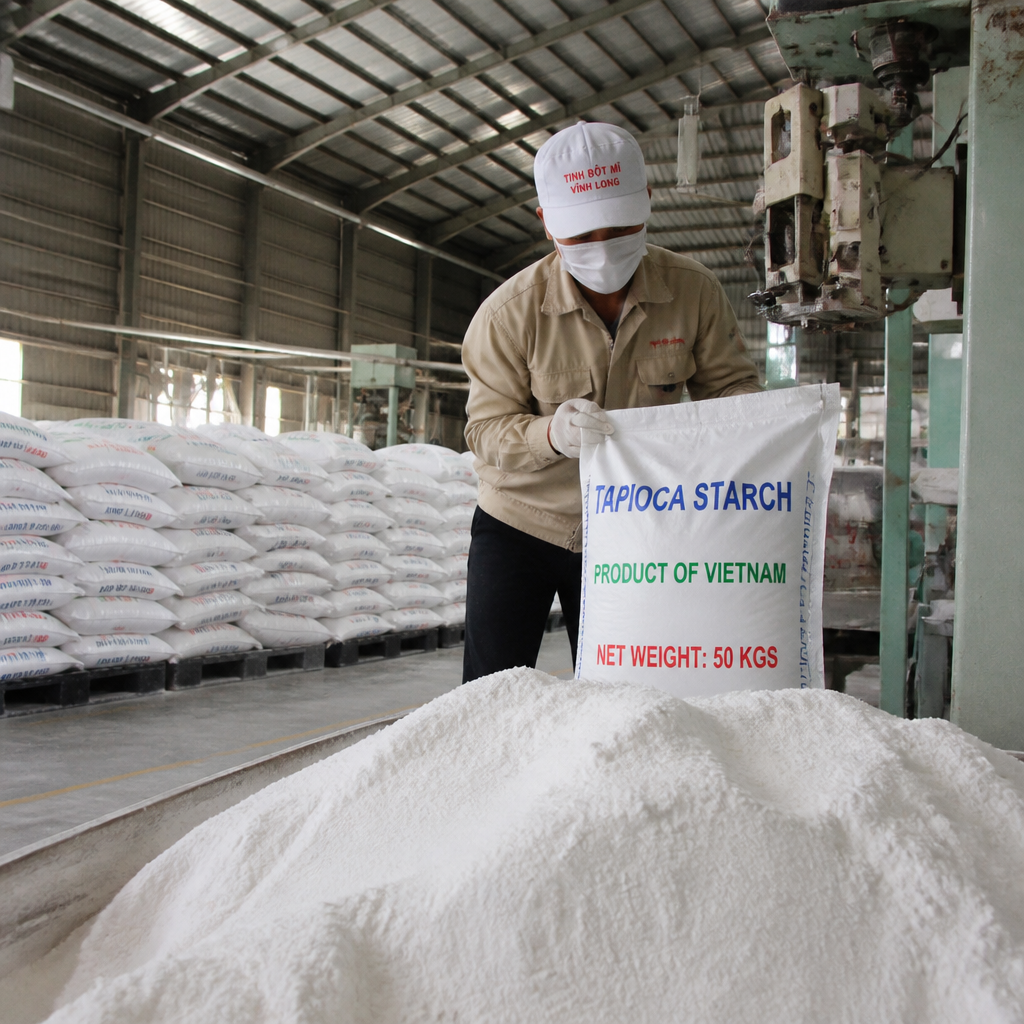
The production of tapioca starch in Vietnam involves a meticulous process that ensures high quality and compliance with international standards. The initial stages of production include cleaning, peeling, and processing the cassava roots. These steps are crucial in removing impurities and preparing the roots for further processing. Advanced machinery is often employed to ensure that the peeling and cleaning are thorough, minimizing waste and enhancing the purity of the starch extracted.
Following the initial processing, the starch undergoes drying and packaging to prepare it for export. The drying process is essential to reduce moisture content, which helps in prolonging the shelf life of the starch. Packaging is done in compliance with export standards, with options ranging from small 25kg bags to large 850kg bags, catering to various market needs and logistics requirements.
Importantly, the entire production process adheres to strict international certifications such as ISO, HACCP, and Halal. These certifications are not merely formalities but are vital in ensuring that the tapioca starch meets global safety and quality benchmarks. ISO certification guarantees that the production processes are efficient and sustainable, while HACCP focuses on food safety, preventing contamination risks. The Halal certification ensures that the processing methods align with Islamic dietary laws, broadening the market reach to Muslim-majority countries.
"Compliance with ISO, HACCP, and Halal certifications underscores the commitment of Vietnam Tapioca Starch Exporters to deliver products that meet the highest international standards."
This rigorous production process not only enhances the quality of the starch but also boosts the reputation of Vietnam as a leading tapioca starch exporter. By maintaining high standards, Vietnamese suppliers can effectively compete in global markets, meeting the diverse needs of industries that rely on tapioca starch.
Classification and Benefits of Tapioca Starch
Tapioca starch, a versatile product derived from cassava roots, is classified into two main types: native tapioca starch and modified tapioca starch. Each type serves distinct purposes across various industries, offering unique benefits that make them indispensable in both traditional and modern applications.
- 💡 Native Tapioca Starch Applications: This unmodified form of tapioca starch is widely used in the food industry due to its excellent thickening and stabilizing properties. It is a key ingredient in gluten-free baking, providing the necessary texture and moisture retention. Additionally, native tapioca starch is used in the production of sauces, soups, and puddings, enhancing their consistency and mouthfeel.
- ⚡ Modified Tapioca Starch Uses: Through physical or chemical processes, tapioca starch can be modified to improve its functional properties. Modified starches are crucial in the textile industry, where they are used as sizing agents to strengthen yarns and improve fabric finish. In the adhesive industry, they enhance the bonding strength of adhesives, making them suitable for a variety of applications, including paper products.
The versatility of tapioca starch extends beyond food and industrial applications. In the textile industry, its use as a sizing agent helps in producing high-quality fabrics by improving the weaving process and fabric durability. Meanwhile, in the adhesive industry, modified tapioca starches are favored for their ability to enhance adhesive properties, which is essential for the production of corrugated boards and laminated products.
The paper industry also benefits significantly from tapioca starch. It is used to increase the strength and smoothness of paper, contributing to better print quality and durability. This makes it a critical component in the production of high-grade paper products.
As a leading Vietnam Tapioca Starch Exporter, the country is well-positioned to meet the global demand for both native and modified tapioca starches. The diverse applications and benefits of these starches underscore their importance in various sectors, highlighting Vietnam's role as a pivotal player in the international market.
Export Significance of Vietnamese Tapioca Starch
Vietnam's position as a leading Vietnam Tapioca Starch Exporter is underscored by its significant presence in key international markets such as China, Japan, South Korea, and Europe. These regions not only represent substantial demand but also reflect the global trust in Vietnamese tapioca starch's quality and reliability.
In China, the largest importer of Vietnamese tapioca starch, the product is highly valued for its application in various industries, including food processing and pharmaceuticals. This demand is mirrored in Japan and South Korea, where the starch is used extensively due to its high-quality standards that meet stringent local regulations. European markets, known for their rigorous quality requirements, also rely on Vietnamese tapioca starch, indicating the product's compliance with international standards.
One of the key factors contributing to the success of Vietnamese tapioca starch in these markets is its adherence to high-quality standards. The starch's production process is aligned with ISO, HACCP, and Halal certifications, ensuring that it meets the diverse and strict quality expectations of global buyers. This commitment to quality not only enhances the product's reputation but also expands its applicability across various industries, from food processing to textiles and adhesives.
Vietnam's adaptable shipping and logistics capabilities are vital in sustaining its competitive edge in the export market. The ability to efficiently manage logistics and adapt to the specific needs of each market allows Vietnamese exporters to ensure timely delivery and maintain strong relationships with international partners. This flexibility is particularly important in meeting the varying demands of markets like Europe, where logistical efficiency can significantly impact market access and customer satisfaction.
"Vietnam's strategic logistics capabilities and commitment to quality make it a preferred supplier in the global tapioca starch market."
In summary, the export significance of Vietnamese tapioca starch is a testament to the country's ability to meet international demand with high-quality products and efficient logistics. This not only reinforces Vietnam's status as a key player in the global market but also ensures sustainable growth and expansion opportunities for its tapioca starch industry.
B Sky: Partner in Cassava Starch Solutions
In the realm of cassava starch solutions, B Sky stands out as a pivotal partner, particularly for businesses seeking reliable Vietnamese suppliers. With a proven track record in the industry, B Sky has established itself as a trusted name, ensuring consistent quality and supply of tapioca starch. This reliability is crucial for businesses that rely on steady inputs for their production processes, ensuring that there are no disruptions in their supply chain.
One of the standout features of B Sky's offerings is the variety of packaging options available. Businesses can choose from 25kg, 50kg, and 850kg bags, catering to different scales of operation. This flexibility in packaging not only meets diverse customer needs but also optimizes storage and transportation logistics. For smaller enterprises, the 25kg and 50kg bags offer manageable quantities, whereas the 850kg bags are ideal for large-scale operations, minimizing handling and packaging waste.
Moreover, B Sky's extensive experience in international logistics further enhances its appeal as a partner. Navigating the complexities of global supply chains requires expertise and precision, which B Sky consistently demonstrates. Their proficiency ensures that tapioca starch shipments are handled efficiently and reach international markets promptly, maintaining the product's quality and integrity throughout the journey.
"B Sky's commitment to quality and logistics expertise makes them a preferred choice for businesses around the globe," notes a spokesperson from a leading food production company.
In conclusion, B Sky's comprehensive approach—combining reliable sourcing, flexible packaging solutions, and logistical prowess—positions them as an indispensable ally in the global cassava starch market. For companies seeking a dependable Vietnam Tapioca Starch Exporter, B Sky offers unmatched benefits that support and enhance business operations worldwide.