
As a leading Vietnam Ginger Exporter, discover the unique qualities of Vietnamese ginger, including its robust flavor and year-round availability, driving global demand.
Vietnam stands as a prominent exporter of ginger, renowned for its distinct varieties like buffalo and brown ginger, cultivated primarily in the fertile regions of the Central Highlands. Ginger, a key agricultural product, holds a significant place in the global spice market due to its versatile uses and health benefits. As a spice, it is indispensable in culinary traditions across the world, valued not only for its flavor but also for its medicinal properties. Global demand for ginger continues to rise as awareness of its health benefits and its essential role in various cuisines grows.
Vietnam's role as a leading exporter is underscored by its strategic cultivation practices and favorable growing conditions. The country's climate and soil conditions in regions such as Cao Bang, Son La, and Dak Lak provide an ideal environment for ginger cultivation, ensuring a robust supply of high-quality produce. This has positioned Vietnam as a key player in the international ginger market, competing strongly with other major producers. The country's commitment to maintaining high standards in farming practices and export procedures further enhances its reputation as a reliable supplier, making it a preferred choice for importers worldwide.
Varieties of Ginger for Export
Vietnam's position as a prominent Vietnam Ginger Exporter is supported by its diverse range of ginger varieties, each with unique characteristics tailored to different markets and culinary uses. Two primary varieties that dominate the export landscape are Buffalo ginger and Brown ginger, each offering distinct features and applications.
Buffalo ginger is renowned for its large size and firm texture, making it an ideal choice for consumers who prefer ginger with minimal fiber. This variety's low-fiber content is particularly advantageous for culinary applications that require smooth consistency, such as in sauces and purees. Its substantial size also makes it a visually appealing choice for fresh markets, where presentation can significantly influence consumer preference.
In contrast, Brown ginger is celebrated for its spicier flavor and more fibrous texture. The higher fiber content makes it suitable for drying and grinding into powder, which is a common form for spice blends and medicinal uses. The robust, spicy profile of Brown ginger enhances its appeal in markets that favor intense flavors, such as in traditional Asian and Middle Eastern cuisines.
- ✅ Buffalo Ginger: Large size, firm texture, low-fiber, ideal for smooth preparations.
- ✅ Brown Ginger: Spicier flavor, more fibrous, perfect for drying and grinding.
The distinctive features of these ginger varieties cater to diverse culinary needs and play a crucial role in Vietnam's strategy to strengthen its position in the global spice market. By offering a range of options, Vietnam ensures that its ginger exports meet the varied demands of international consumers, further solidifying its reputation as a leading source of high-quality ginger.
Cultivation Regions and Conditions
Vietnam's diverse geography provides an ideal setting for ginger cultivation, with the Central Highlands standing out as a particularly fertile region. Known for its rich basalt soils and mild climate, this area offers optimal conditions for growing high-quality ginger, which plays a crucial role in the country's status as a leading Vietnam Ginger Exporter.
Successful ginger cultivation hinges on several key environmental factors. Temperature, rainfall, and altitude are critical components that influence the growth and quality of ginger. The Central Highlands, with its moderate temperatures and well-distributed rainfall, ensures that ginger plants receive the necessary hydration and warmth throughout the growing season. The elevation in this region also contributes to a slower, more controlled growth process, which enhances the ginger's flavor and aroma.
Beyond the Central Highlands, several other regions in Vietnam are renowned for their ginger production. These include Cao Bang, Son La, Tuyen Quang, and Dak Lak. Each of these areas offers unique advantages, from the specific soil composition to microclimates that further refine the characteristics of the ginger produced. For example, Dak Lak, with its blend of volcanic soil and suitable rainfall, supports robust plant growth, while the cooler temperatures in Cao Bang and Son La contribute to the development of ginger with a distinctively spicy flavor profile.
Overall, the combination of fertile soils, favorable climate conditions, and strategic regional cultivation practices ensures that Vietnam remains a significant player in the global ginger market, continually meeting the demands of international buyers with high-quality produce.
Harvesting, Cleaning, and Packaging Processes
The journey of ginger from farm to market involves meticulous processes that ensure the quality and safety of the product. After harvesting, the initial focus is on post-harvest cleaning, a crucial step in preparing ginger for export. This process involves the removal of pesticides and any signs of rot, which is essential for meeting international safety standards and maintaining the integrity of the ginger.
Once the ginger is cleaned, it undergoes a series of sorting and brushing techniques. These methods are employed to categorize the ginger based on size, quality, and appearance. Sorting ensures that only the best quality ginger is selected for export, while brushing helps in removing any remaining soil or debris, enhancing the visual appeal of the ginger.
Packaging is another critical aspect of the ginger export process. Fresh ginger is typically packed in mesh bags or cartons, which allow for adequate ventilation and prevent moisture buildup that could lead to spoilage. For dried ginger, the packaging requirements are more stringent. It is packed in vacuum-sealed, moisture-proof bags to preserve its quality and extend its shelf life by preventing exposure to air and moisture.
"Proper cleaning and packaging not only ensure compliance with international standards but also enhance the shelf life and marketability of Vietnamese ginger," says a representative of a leading Vietnam Ginger Exporter.
These comprehensive processes highlight the commitment of Vietnamese ginger suppliers to deliver a product that meets the highest standards of quality and safety, reinforcing Vietnam's position as a leading player in the global ginger market.
Storage and Shelf Life
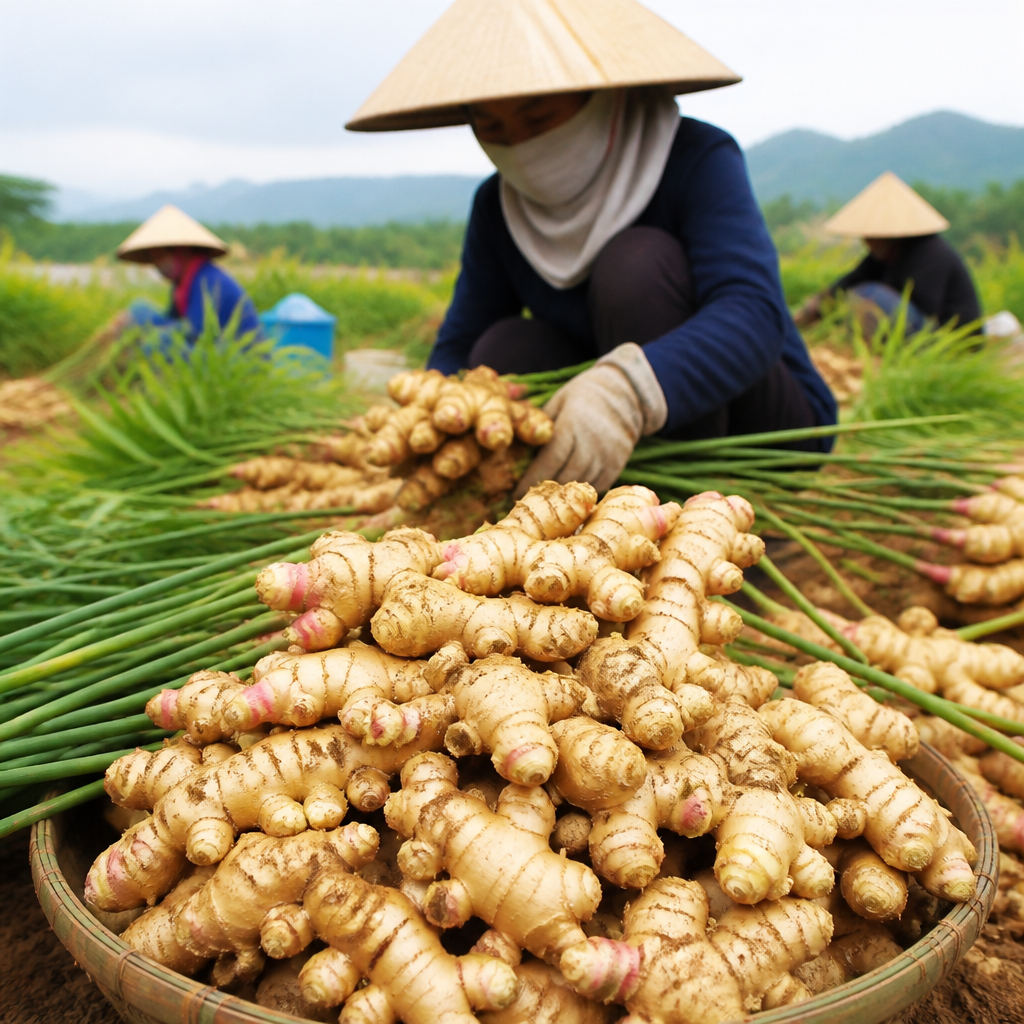
Ensuring the quality and longevity of Vietnamese ginger, especially as a prominent export product, hinges significantly on proper storage conditions. Fresh ginger requires a controlled environment to maintain its freshness and flavor. Ideally, it should be stored at temperatures between 12–14°C in a cool, dry, and well-ventilated space. Such conditions help prevent spoilage and maintain the ginger's crisp texture and pungent aroma, which are critical for both consumer satisfaction and market competitiveness.
On the other hand, dried ginger offers a longer shelf life, ranging from 6 to 12 months. This extended shelf life makes it an attractive option for markets requiring longer storage periods, such as those in Europe and North America. Proper packaging, often in vacuum-sealed or moisture-proof bags, plays a crucial role in preserving the quality of dried ginger over this period.
"Proper storage extends shelf life and preserves the intrinsic qualities that make Vietnamese ginger sought after globally."
The importance of adhering to these storage guidelines cannot be overstated. Maintaining optimal storage conditions ensures that the ginger retains its essential oils and flavors, which are key selling points in international markets. For Vietnam, as a leading ginger exporter, this attention to detail in storage practices is a testament to their commitment to quality and customer satisfaction, reinforcing their reputation on the global stage.
Major Export Markets for Vietnamese Ginger
Vietnamese ginger has carved out a significant presence in several key international markets, reflecting its growing importance in the global spice trade. The primary destinations for Vietnam's ginger exports include the Middle East, South Korea, Japan, Europe, and North America. Each of these regions presents unique opportunities and challenges that shape Vietnam's export strategies.
In the Middle East, the demand for ginger is driven by its use in traditional cuisines and medicinal practices. The region's appreciation for strong flavors aligns well with the robust and spicy profile of Vietnamese ginger. Meanwhile, in South Korea and Japan, ginger is a staple in many culinary dishes and is also valued for its health benefits. These countries have a high demand for quality ginger that meets their stringent food safety standards.
Europe and North America represent significant markets due to their large consumer bases and increasing interest in natural and organic products. The growing trend towards health-conscious eating habits has spurred a rise in ginger consumption, particularly in the form of teas, supplements, and culinary ingredients.
Globally, the demand for ginger has been on an upward trajectory, driven by its recognized health benefits, including anti-inflammatory and antioxidant properties. This trend is evident in regions where consumers are increasingly seeking natural remedies and ingredients.
"The global ginger market is expected to grow at a CAGR of 6.8% from 2021 to 2026, highlighting the expanding opportunities for exporters like Vietnam."
To capitalize on these trends, Vietnam has implemented a strategic approach to broaden its market reach. This includes enhancing the quality of its ginger through improved cultivation techniques and adhering to international standards for food safety. By focusing on organic farming practices and leveraging competitive pricing, Vietnam aims to strengthen its position as a leading ginger exporter on the world stage.
Necessary Export Documentation
When exporting ginger from Vietnam, a comprehensive set of documents is essential to ensure compliance with international trade regulations and facilitate smooth transactions. These documents not only serve as proof of the product's origin and quality but also help in meeting the stringent requirements of various import markets.
- Phytosanitary Certificate: This certificate is crucial for confirming that the ginger being exported complies with the plant health standards of the importing country. It ensures that the ginger is free from pests and diseases, which is a mandatory requirement for many international markets. The certificate is usually issued by the National Plant Protection Organization (NPPO) of Vietnam.
- Certificate of Origin: This document certifies that the ginger is produced in Vietnam, which can be important for tariff purposes and to fulfill the regulations of trade agreements. It is typically issued by the Vietnam Chamber of Commerce and Industry (VCCI).
- Packing List, Commercial Invoice, and Bill of Lading: These documents are essential for the logistical and financial aspects of export. The packing list provides detailed information about the shipment's contents, while the commercial invoice outlines the transaction details, including the price and terms of sale. The Bill of Lading acts as a receipt for the cargo and a contract between the shipper and the carrier, crucial for the transfer of goods.
- Compliance with International Trade Regulations: Ensuring that all documentation complies with international trade regulations is vital to avoid delays and penalties. This includes adhering to the specific import requirements of destination countries, which may vary significantly. Compliance helps in maintaining Vietnam's reputation as a reliable ginger exporter.
By securing these documents, Vietnam ginger exporters can effectively navigate the complexities of international trade, ensuring their products reach global markets efficiently and without unnecessary hindrances.
Shipping and Logistics
In the realm of shipping and logistics for Vietnamese ginger exports, there are critical decisions to be made between sea freight and air freight. Each mode of transport has its own set of considerations that can significantly impact the cost, speed, and quality of the product upon arrival. Sea freight is generally more cost-effective and suitable for bulk shipments, but it comes with longer transit times, which can be a drawback for fresh ginger that needs to reach markets quickly to maintain its freshness. In contrast, air freight offers speedier delivery, ensuring that the ginger arrives in optimal condition, but it comes at a higher cost, which can affect the overall pricing strategy.
To preserve the quality of Vietnamese ginger during transit, cold chain logistics play an essential role. Maintaining a consistent temperature-controlled environment from the point of origin to the destination helps in preventing spoilage and preserving the ginger’s natural flavor and aroma. This is particularly crucial for fresh ginger, which requires careful handling to maintain its quality over longer distances.
However, the logistics of transporting ginger are not without challenges. Issues such as fluctuating fuel prices, regulatory compliance across different countries, and the need for timely delivery can complicate the logistics process. To address these, exporters often employ advanced tracking systems to monitor shipments in real-time, ensuring transparency and efficiency in the supply chain. Furthermore, partnerships with reliable logistics providers can help mitigate risks associated with delays and non-compliance.
"Effective logistics management is vital for Vietnam Ginger Exporter to sustain its competitive edge in the global market."
By carefully weighing the options between sea and air freight, implementing robust cold chain logistics, and addressing potential logistical challenges, Vietnam can continue to strengthen its position as a leading exporter of high-quality ginger.
Competitive Advantages of Vietnamese Ginger
Vietnamese ginger has carved a niche in the global spice market, thanks to its distinct characteristics and strategic advantages. One of the most notable features is its strong aroma and spicy flavor, which sets it apart from other varieties. This unique taste profile is highly sought after by culinary experts and food manufacturers worldwide, making it a preferred choice in many international cuisines.
Another significant advantage is the competitive pricing and year-round availability of Vietnamese ginger. Due to the favorable cultivation conditions in regions like the Central Highlands, Vietnam can produce ginger throughout the year, ensuring a consistent supply. This continuous availability, coupled with competitive pricing, makes Vietnamese ginger an attractive option for importers looking for both quality and affordability.
Furthermore, Vietnam's focus on organic and clean farming practices enhances the appeal of its ginger in the global market. With increasing consumer demand for organic products, Vietnamese ginger farmers have adopted sustainable agricultural methods, reducing the use of chemicals and emphasizing eco-friendly practices. This commitment to organic farming not only meets international standards but also boosts the marketability of Vietnamese ginger as a healthier and more sustainable choice.
- ✅ Strong Aroma and Spicy Flavor: Highly valued in culinary applications worldwide.
- ✅ Competitive Pricing and Year-Round Availability: Ensures consistent supply and cost-effectiveness.
- ✅ Focus on Organic and Clean Farming Practices: Meets growing consumer demand for sustainable products.
These competitive advantages position Vietnam as a leading ginger exporter, capable of meeting diverse market needs while maintaining high standards of quality and sustainability.







