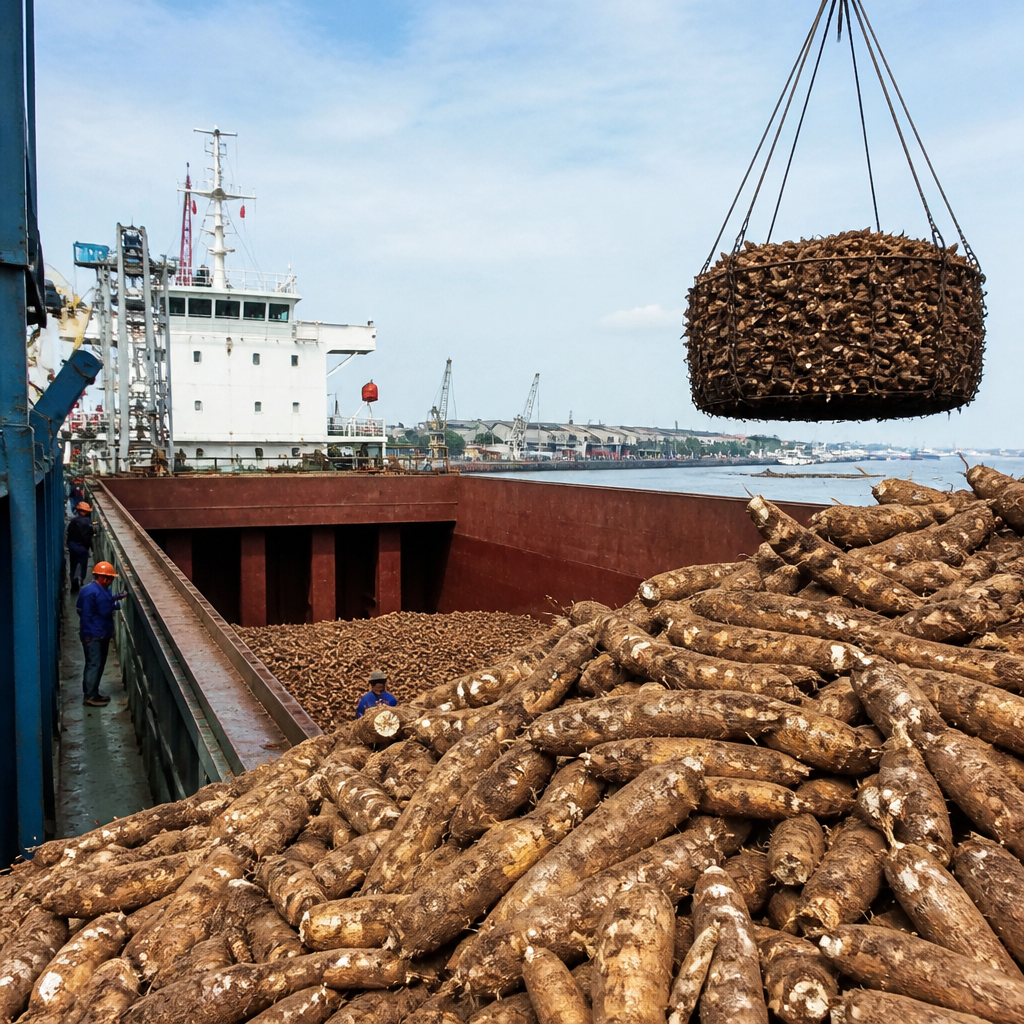
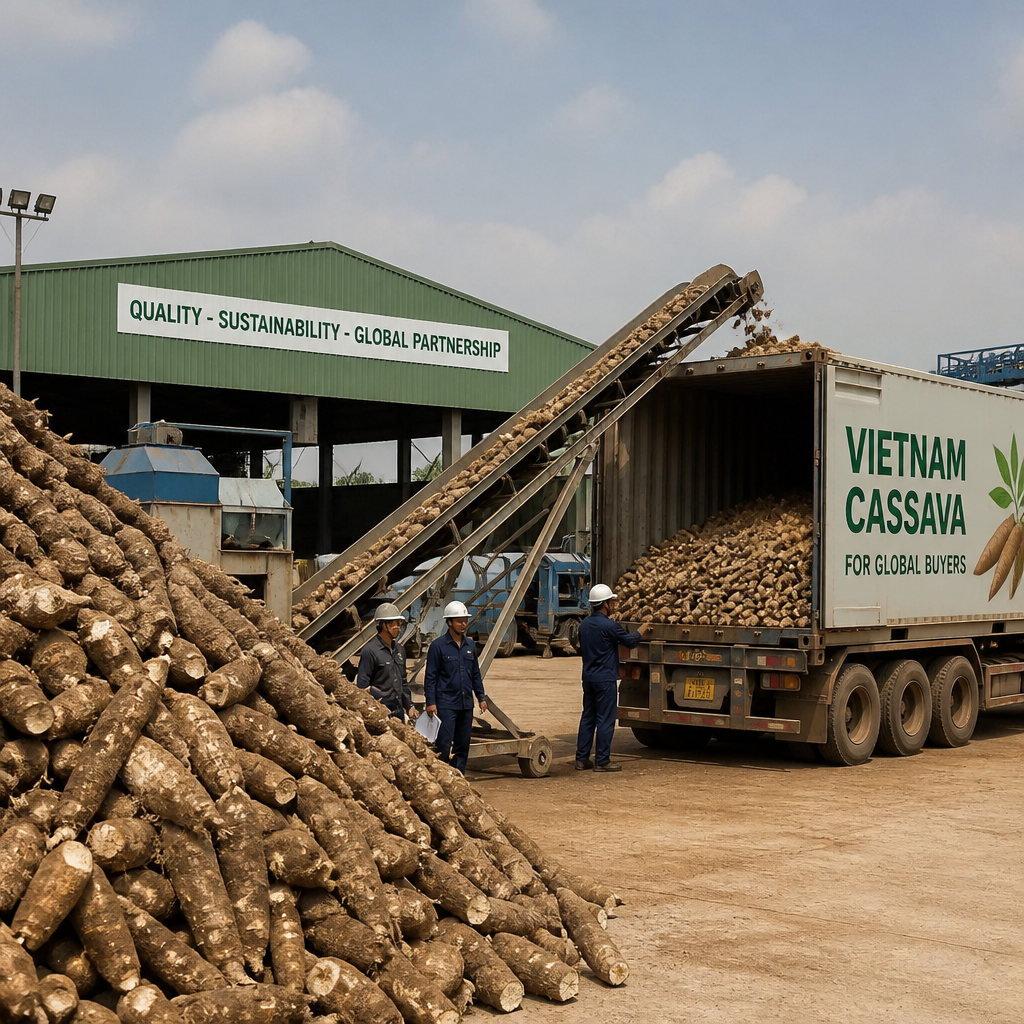
Vietnam Cassava Exporter leverages its vast cultivation areas to supply high-quality tapioca starch for global markets, projecting exports to reach USD 970 million by 2024.
Vietnam has increasingly become a prominent player in the global cassava industry, thanks to its extensive cultivation areas and strategic export initiatives. The Central Highlands and the South East are the primary cassava-growing regions in the country, with the Central Highlands alone accounting for a substantial 60% of the national cassava area. This region is home to an impressive 172,500 hectares dedicated to cassava cultivation, contributing significantly to Vietnam's agricultural output. In 2021, these efforts culminated in a total production of nearly 10.7 million tons, underscoring the region's pivotal role in the country's cassava industry.
The average yield in the Central Highlands stands at approximately 20.3 tons per hectare, a figure that reflects the efficiency and productivity of the farming practices employed in the region. This high yield not only meets domestic demands but also positions Vietnam as a competitive player in the international cassava market. The substantial output from these regions supports Vietnam's role as a major cassava exporter, catering to global buyers who rely on this staple for various industrial applications.
However, Vietnam's cassava industry faces several challenges that must be addressed to ensure sustainable growth and competitiveness in the global market. One of the primary issues is the dependence on specific markets. Vietnam's cassava exports are heavily reliant on a few key markets, primarily China. This dependence exposes the industry to risks associated with market fluctuations and trade barriers. For instance, any changes in China's import policies or demand can drastically affect Vietnamese cassava exporters, creating instability in income and production planning.
Another significant challenge involves the fluctuations in production and yield. The cassava yield in Vietnam is subject to considerable variability due to factors such as climate change and pest infestations. While the average yield of 20.3 tons per hectare is substantial, it can vary greatly from year to year, impacting the total output. In 2021, the total production was nearly 10.7 million tons, but such figures can be unpredictable, affecting supply consistency and pricing strategies.
Additionally, infrastructure and logistics issues further complicate the cassava supply chain. Inadequate infrastructure, such as poor road conditions and limited transportation options, particularly in major cassava-growing regions like the Central Highlands, hinders the efficient movement of goods. This not only increases costs but also affects the quality and competitiveness of Vietnamese cassava in international markets.
The environmental impacts of large-scale farming also pose challenges. Extensive cassava cultivation can lead to soil degradation and deforestation, contributing to environmental imbalance. Sustainable farming practices are essential to mitigate these impacts and ensure the long-term viability of the cassava industry.
Despite these challenges, the potential and benefits of cassava processing offer promising avenues for growth. At the heart of this potential is tapioca starch, a derivative of cassava that has garnered attention for its versatility and utility across multiple sectors. Tapioca starch serves as a highly adaptable food material, prized for its capacity to act as a substitute for more conventional ingredients like cornstarch and flour. This characteristic makes it an invaluable resource in the food industry, where it is used in the production of gluten-free products, a market that has been expanding due to increasing consumer health consciousness. Its excellent thickening properties make it a preferred choice in the preparation of soups, sauces, and gravies, providing a smooth texture without altering the flavor of the dish.
Beyond the culinary sphere, tapioca starch finds significant applications in the paper and textile industries. In paper manufacturing, it is used as a coating and binding agent, enhancing the quality and durability of the final product. The textile industry benefits from tapioca starch's ability to provide a finish to fabrics, improving their appearance and feel.
- ⚡ Food Industry: An essential ingredient for gluten-free products, soups, sauces, and gravies.
- ⚡ Paper Industry: Used as a coating and binding agent for quality enhancement.
- ⚡ Textile Industry: Provides finishing to fabrics, enhancing texture and appearance.
This multifaceted utility underscores the strategic importance of cassava processing for Vietnam, a country that is emerging as a significant player in the global market. As a Vietnam Cassava Exporter, the nation can leverage these diverse applications to increase its export footprint, particularly in regions where demand for sustainable and versatile raw materials is on the rise. The ability to substitute traditional ingredients with tapioca starch not only opens new markets but also positions Vietnam as a key supplier in the global supply chain, catering to industries that are constantly seeking cost-effective and high-quality alternatives.
With the global demand for tapioca starch rising, driven by its versatile applications across industries such as food, paper, and textiles, Vietnam has a significant opportunity to expand its international market presence. The country's cassava industry is well-positioned to capitalize on this trend, particularly with the expansion into major export markets including China, Japan, and ASEAN countries.
Vietnam's growing export share is a testament to its strategic positioning in the global cassava market. The country's ability to meet the rising demand for tapioca starch is bolstered by its extensive cultivation areas, particularly in the Central Highlands, which accounts for 60% of the national cassava area. As a result, Vietnam has been steadily increasing its export volume, capturing a larger share of the market.
Projections for 2024 indicate a promising future, with the export value of cassava products expected to reach USD 970 million. This remarkable figure underscores the potential for Vietnam to enhance its economic contributions from the cassava industry. Such growth is not only beneficial for the country's economy but also positions Vietnam as a key player in the global supply chain of cassava products.
The expansion into new markets like China, Japan, and ASEAN is strategic, given these regions' growing industrial and consumer demands for high-quality tapioca starch. By tapping into these markets, Vietnam can diversify its export portfolio and reduce dependency on any single market, thereby mitigating risks associated with market fluctuations.
Overall, the future prospects for Vietnam's cassava industry are bright, driven by increasing global demand and strategic market expansion. These opportunities, coupled with Vietnam's growing export share, set the stage for significant economic growth and development within the sector.
The cassava industry in Vietnam stands at a pivotal juncture, where strategic enhancements can unlock significant growth potential. Key strategies include improving production techniques, diversifying export markets, enhancing packaging and logistics, and investing in industrial-scale manufacturers.
First, improving production techniques is crucial for increasing yield and quality. By adopting advanced agricultural practices, such as precision farming and the use of high-yield cassava varieties, farmers can significantly boost productivity. For instance, the Central Highlands, which accounts for 60% of the national cassava area, could see its average yield of 20.3 tons per hectare increase, thereby enhancing the overall output.
Another essential strategy is diversifying export markets. Currently, Vietnam's cassava exports heavily rely on a few key markets, leaving the industry vulnerable to market fluctuations. Expanding into new regions such as Japan and ASEAN countries can mitigate this risk and tap into the growing global demand for tapioca starch. With a projected export value of USD 970 million in 2024, diversification is not just an opportunity but a necessity.
Furthermore, enhancing packaging and logistics can significantly improve the efficiency of cassava exports. By investing in modern packaging solutions and optimizing supply chain logistics, Vietnam Cassava Exporters can reduce costs and improve the shelf life and quality of their products during transit. This is particularly important when exporting to distant markets where maintaining product integrity is crucial.
Lastly, investment in industrial-scale manufacturers can drive the cassava industry towards a more sustainable and profitable future. Large-scale processing facilities can process cassava into high-demand products, such as tapioca starch, more efficiently. This not only increases production capacity but also enables Vietnam to meet the rising global demand and strengthen its position as a leading cassava exporter.
"With strategic investments and innovations, Vietnam's cassava industry can achieve unprecedented growth and sustainability."
In recent years, the role of technology and innovation in the cassava industry in Vietnam has become increasingly pivotal, setting the stage for a transformative impact on production and export capabilities. The adoption of advanced farming techniques is at the forefront of this transformation. Techniques such as precision agriculture, which utilizes GPS and IoT devices, allow farmers to optimize resource use, monitor crop health, and improve efficiency. This technological integration not only enhances yield but also contributes to better quality produce, meeting the stringent demands of global buyers.
Furthermore, the development of sustainable practices is gaining significant traction. With environmental concerns on the rise, Vietnam's cassava industry is embracing methods that reduce the ecological footprint of farming. For instance, crop rotation and organic farming practices are being increasingly adopted to maintain soil health and reduce the reliance on chemical fertilizers. This shift towards sustainability is crucial as it ensures long-term productivity and aligns with global trends towards eco-friendly agriculture.
Enhancing yield and quality remains a primary focus, driven by technological innovations. Through biotechnology, cassava varieties are being developed that are more resistant to pests and diseases, thus reducing crop losses. These advancements are crucial for maintaining consistent supply levels, especially in the face of climate change, which poses a significant threat to agricultural outputs worldwide.
In addition to improvements in farming practices, the adoption of modern packaging solutions is revolutionizing the way cassava products are presented to international markets. Innovative packaging not only extends the shelf life of products but also ensures that they meet international quality standards. For example, vacuum sealing and biodegradable packaging options are being explored to cater to environmentally conscious consumers.
"The integration of technology in Vietnam's cassava sector is not just about increasing output; it's about ensuring sustainability and quality that meets global standards," says an industry expert.
By embracing these technological and innovative strategies, Vietnam is positioning itself as a competitive Vietnam Cassava Exporter on the global stage, ready to meet the increasing demand and navigate the complexities of international trade.
The cassava industry in Vietnam is at a pivotal point, where addressing current challenges is crucial for future success. Issues such as market dependence, production fluctuations, and infrastructural inadequacies are not just obstacles but opportunities for transformation. By confronting these hurdles directly, Vietnam can ensure a sustainable and prosperous future for its cassava sector.
The potential benefits of such improvements are substantial. Enhanced production techniques and diversified export markets promise not only increased yields but also greater economic stability. For instance, the projected export value of USD 970 million by 2024 underscores the lucrative prospects awaiting the industry. Moreover, tapping into new markets like Japan and ASEAN can significantly bolster Vietnam's global cassava export share.
Strategic planning and innovation are the cornerstones of bridging the existing gaps. Investing in technology and sustainable practices can revolutionize farming methods, leading to better yield and quality. The adoption of modern packaging solutions further enhances product appeal and market reach. These strategic initiatives are not just about maintaining the status quo but about pioneering a new era of growth and competitiveness.
In conclusion, while the challenges are significant, the path forward is clear. Through concerted efforts in strategic planning and innovation, Vietnam can transform its cassava industry into a thriving sector that not only meets global demand but also sets new standards in agricultural excellence.