Evaluate flavor profiles, processing techniques, and commercial competitiveness between black tea Vietnam and Assam tea for international beverage chains.
In modern commercial tea and food & beverage (F&B) markets, supply chain management extends far beyond sourcing compliant raw ingredients. It directly dictates cost optimization, risk diversification, and long-term sustainability. For decades, Indian Assam tea established the global benchmark for bold brews, serving as the backbone for tea bags, milk tea applications, and ready-to-drink (RTD) beverages. However, geopolitical shifts, South Asian climate volatility, and shrinking profit margins force international procurement teams to restructure their purchasing portfolios. Under these market conditions, black tea Vietnam emerges as a strategic substitute and complementary asset, offering agile supply capabilities and superior commercial potential.
Global Supply Chain Trends: Can Black Tea Vietnam Replace Assam Tea in the Future?
The global tea trade is experiencing a structural realignment. As F&B chains scale at unprecedented rates, unipolar reliance on legacy production hubs exposes critical vulnerabilities. Procurement directors no longer look for a single origin; they build multi-sourcing strategies where black tea Vietnam functions as an essential link.
Supply chain hurdles across traditional tea origins
India's Assam region earned renown through expansive plantations lining the Brahmaputra River basin. International F&B groups now face mounting barriers when depending exclusively on this origin:
- Extreme weather impacts: Erratic flooding paired with prolonged droughts across Assam state cuts seasonal crop yields, driving raw material prices up unpredictably.
- Logistics costs and transit times: Maritime routes from East Indian ports to key consumer hubs across East Asia, North America, and Europe face persistent port congestion, pushing container freight rates and bunker fuel surcharges higher.
- Export policies and residue governance: Stringent Maximum Residue Limits (MRLs) enforced across EU and US markets against conventional South Asian crop protection chemicals create substantial customs clearance risks for bulk shipments.
The rise of Southeast Asian raw material hubs
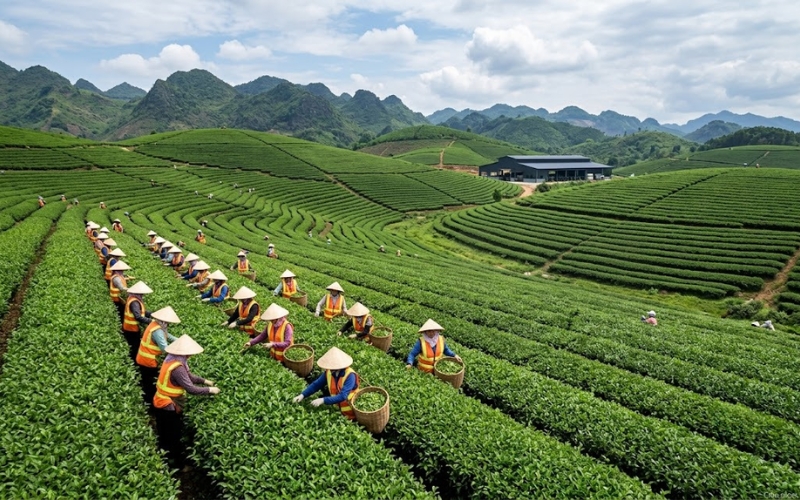
Confronted with these supply vulnerabilities, ingredient importers are pivoting toward Southeast Asia. Backed by fertile basaltic red soils and cooler northern highlands, black tea Vietnam swiftly establishes its footing as a prime export partner. Vietnam ranks among the world's top tea-exporting nations, operating commercial acreage across Lam Dong, Yen Bai, Phu Tho, and Thai Nguyen.
Structured investments in internationally certified agricultural frameworks (VietGAP, GlobalGAP, Rainforest Alliance) and prime maritime shipping routes enable Vietnamese processors to compress lead times dramatically, securing peace of mind on forward contracts.
Evaluating Flavor Profiles and Technical Specifications Between Black Tea Vietnam and Assam Tea
For a new ingredient origin to enter proprietary formulas at major F&B brands, its sensory profile and industrial brewing performance serve as the primary criteria.
Sensory profile breakdown
Traditional Assam tea delivers bold, full-bodied extraction characterized by distinct malty notes and brisk astringency. These traits make it an established base for British-style milk teas and spiced Masala Chai.
In contrast, black tea Vietnam presents a broader, softer sensory spectrum:
- Body: Assam tea drinks heavy, dense, and punchy; black tea Vietnam yields a medium-to-full body with a rounded mouthfeel.
- Dominant notes: Assam leads with heavy malt, faint smoke, and dry wood; black tea Vietnam highlights ripe stone fruits, natural honey, and subtle dried wood undertones.
- Astringency: Assam delivers sharp, immediate bitterness across the palate; black tea Vietnam offers clean, gentle astringency without harshness.
- Aftertaste: Assam leaves a lingering, drying finish; black tea Vietnam carries a deep, lasting sweet finish down the throat.
- Liquor clarity: Assam brews into a dark brownish-red; black tea Vietnam pours a vibrant ruby red, bright and free of cloudiness.
The natural sweet finish of black tea Vietnam enables R&D formulators to lower synthetic sweetener loads in modern drink recipes, supporting the surging international demand for clean-label products.
Industrial processing methods
Leaf cell breakdown determines extraction velocity and efficiency during large-scale brewing:
|
Processing Method |
Technical Specifications & Extraction Rate |
Target Industrial Applications |
|
CTC (Crush - Tear - Curl) |
Both Assam and Vietnamese processing plants run CTC machinery to create uniform tea pellets that release tannins and theaflavins rapidly in under 3 minutes. |
Ideal for tea bag packing lines and industrial milk tea concentrate brewing. |
|
Orthodox (Traditional Loose Leaf) |
Black tea Vietnam displays exceptional versatility here. Whole-leaf grades (OP, FOP, PEKOE) processed from midland cultivars or ancient Shan Tuyet tea trees preserve volatile essential oils. This produces clear liquor with an outstanding non-clouding effect under refrigeration. |
Critical technical baseline for commercial fruit iced teas and cold-packed RTD beverages. |
Consistent batch chemistry allows operators to integrate black tea Vietnam smoothly into commercial extraction equipment, maximizing soluble dry matter yields while keeping quality uniform from run to run.
Commercial Competitiveness: Black Tea Vietnam vs Assam Tea
From an international sales director's standpoint, product quality must align with measurable margin health and value chain resilience.
Production volume and stability
While India harvests massive volumes of black tea, domestic consumption across a population exceeding 1.4 billion people absorbs most of it, creating tight export availability and internal pricing swings.
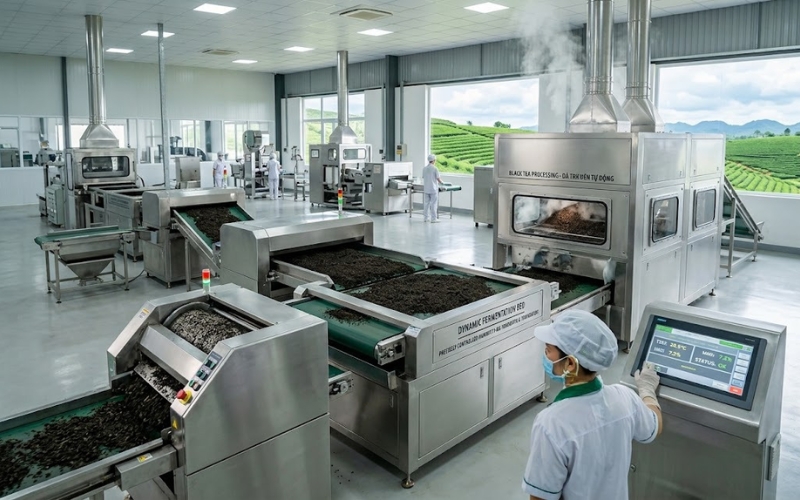
Vietnam structures its tea sector for focused export performance. Modern domestic processing facilities feature continuous fluid-bed dryers, high-speed optical color sorters, and automated, humidity-controlled warehouse operations. A dependable output of tens of thousands of metric tons per year allows suppliers of black tea Vietnam to fulfill high-volume contracts for multinational franchise operations without interruption.
Margin optimization
Cost efficiency represents a decisive commercial advantage. Competitive labor, accessible agricultural land, and high-throughput processing facilities keep ex-factory prices in Vietnam lower than those from South Asian or East African origins:
- Raw material cost variance: Market indices show sourcing black tea Vietnam trims ingredient input costs by 15% to 25% compared to exclusive procurement of similar-grade Assam tea.
- Free Trade Agreement (FTA) utility: Vietnam maintains deep integration across modern multilateral trade frameworks, including the EVFTA (European Union), CPTPP (Asia-Pacific), RCEP, and VKFTA. Import tariffs falling to 0% or low preferential bands translate into direct bottom-line margin expansion for global distributors.
Agile freight solutions
Shorter maritime transit intervals help businesses lower safety stock requirements and free up working capital:
- Strategic geographical proximity: Direct shipments from Vietnam's deep-water seaports reach regional demand centers across Southeast Asia, China, Taiwan, South Korea, and Japan within 3 to 7 days. For North American and Western European lanes, direct routes bypass feeder-port transshipments, reducing transit exposure.
- Flexible MOQ agreements: Unlike Indian tea auction houses that enforce rigid full-container-load parameters, processors of black tea Vietnam offer manageable minimum order quantities (MOQs) for pilot batches, helping companies conserve operating cash flow.
Custom OEM/ODM and Blending Solutions for Commercial Applications: Black Tea Vietnam
Consumer appetite for innovative beverages makes proprietary formulations a vital brand asset for F&B groups.
Optimized blending strategies
Raw ingredient positioning rarely demands an all-or-nothing choice between Assam and Vietnamese cultivars. Today's commercial product developers lean heavily on targeted blending formulations:
- Balanced formulation (Assam - Vietnam Blend): Formulators combine Assam tea (for brisk body, deep reddish-brown color, and heavy malt tones) with black tea Vietnam (for bright floral notes, ruby clarity, and a lingering sweet finish) to craft a balanced tea foundation.
- Recipe stability: This composite base holds up against whole dairy milk, non-dairy creamers, and concentrated tropical fruit syrups, preserving flavor consistency across harvesting seasons.
Introducing black tea Vietnam into core beverage bases protects signature recipe profiles while sheltering brands from sudden price hikes on international Assam auctions.
Contract manufacturing and export packaging capabilities
Beyond exporting bulk loose-leaf bags, Vietnamese manufacturing partners provide full-service OEM/ODM programs:
- R&D and custom tailoring: Experienced food scientists adjust oxidation ratios, moisture levels, and cut-size specs to match client specification sheets precisely.
- Flexible packaging configurations: Facilities handle multi-format packaging needs, ranging from industrial 5kg, 10kg, and 25kg vacuum-sealed aluminum bags to ultrasonic pyramid tea bags, staple-free double-chamber bags, and retail-ready private-label cartons.
- International regulatory certification: Processing floors run under strict regulatory controls certified to HACCP, ISO 22000, Halal, Kosher, and US FDA registration, accelerating customs entry into major destination markets.
Securing High-Grade Black Tea Vietnam for Your Brand
Global supply chain disruptions require strategic agility. High-grade black tea Vietnam provides a reliable counterpart to classic Assam tea, unlocking margin savings, cutting freight lead times, and safeguarding consistent product quality for international F&B businesses. Combining sustainable agricultural land, modern processing plants, and competitive commercial terms, Vietnam's tea industry is equipped to handle demanding multinational specifications. To request a commercial Testing Sample Kit, obtain tailored export pricing, or consult on custom base-tea blending services, contact Viet Global Source directly at dat.nguyen@vietglobalsource.com. Our commercial supply and beverage R&D team helps scale your brand's supply operations efficiently.